Materials & Techniques
Four techniques, four ways to shape metal
An introduction to Knitted Metal Fabric, Trillesse Weave, Scale Knit and Metal Origami, through pattern and form.
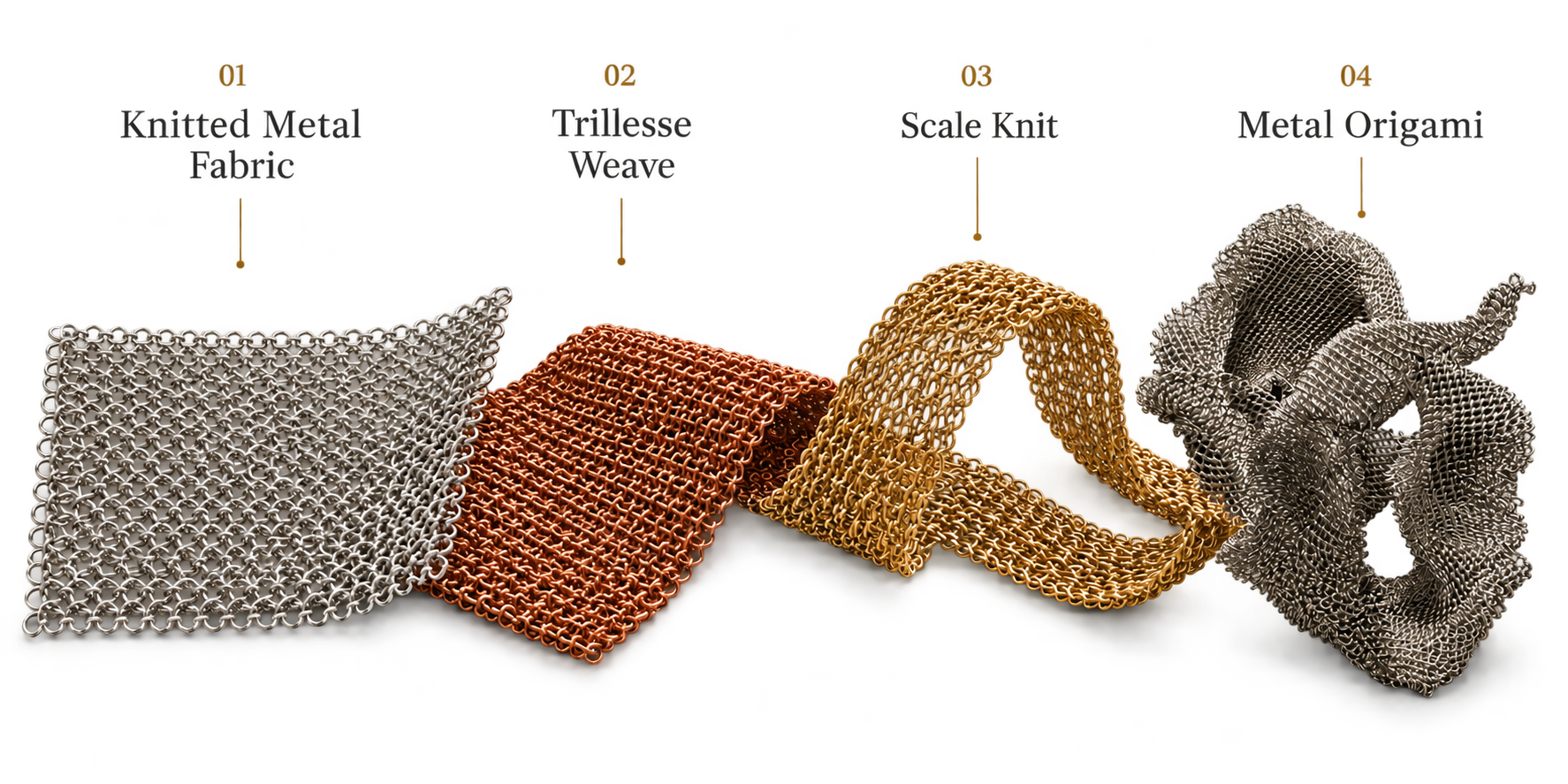
The choice of a metal surface begins before its colour. Pattern, openness and form all affect the way a piece sits within a space. Metfab works with four named techniques, each offering a different starting point for a design conversation: Knitted Metal Fabric, Trillesse Weave, Scale Knit and Metal Origami.
Knitted Metal Fabric: look at the whole sheet
A sample shows the relationship between a repeated metal pattern and the openings within it. Seen close up, individual connections draw the eye; viewed across a larger area, they become a surface. Both scales matter when considering a curtain or partition.
Begin by looking at the sample against the background intended for the project. Then consider its arrangement: a broad sheet, a gathered curtain and a series of narrower areas will each present that pattern differently. The final fabric and hanging system should be selected together.
Trillesse Weave: make the pattern part of the brief
Trillesse Weave gives another pattern to consider alongside the knitted fabric. In Metfab’s supplied samples, silver and copper-toned pieces show the surface both open and arranged in folds. The photographs are a useful introduction, but a physical sample is the place to examine its particular detail.
When comparing it with another technique, keep the design question specific. Are you responding to the pattern itself, the way a finish appears across it, or its relationship with the materials around it? This helps move the selection beyond a general preference for one photograph.
Scale Knit: follow the line into space
Metfab’s gold Scale Knit reference installation uses curved, looping lengths that make the material visible from several directions. A close view reveals the repeating surface; a wider view shows how those lengths occupy space.
That example offers a starting point for thinking about a continuous line, the turn of an edge and the space inside a loop. Any proposed form still needs development around the selected sample, its size and its support requirements.
Metal Origami: consider the complete form
With Metal Origami, the conversation moves towards sculpture. Metfab’s abstract reference piece gathers metal fabric into an arrangement of folds, openings and projecting edges. The relationship between those parts gives the piece its identity.
View a sculptural proposal from more than one side. Its outline, the spaces within it and the shadows it creates all contribute to the result. Choose a technique by the role it needs to play in the project, then work through samples and details to develop that idea.